Manhattan Wellness Guide Acupuncture & Chinese Medicine
Explore 23 specialized treatments available at Delight Acupuncture. From chronic pain and fertility to stress relief and facial rejuvenation — find the right holistic solution for your health needs.
In short
This guide explains how acupuncture, cupping, gua sha, tui na and Chinese herbal medicine differ, what each is best used for, and how long a course takes. Acupuncture has been in use for at least 2,500 years and is practised in 103 of the 129 countries reporting data to the WHO; in the United States, adult use doubled between 2002 and 2022.
Clinic facts
- Rating
- 5.0 / 5 · 23 Google reviews
- Experience
- 15+ years · 2 licensed L.Ac.
- First visit
- 75 minutes
- Follow-up
- 45–60 minutes
- Address
- 408 West 57th Street, Suite 1K, New York, NY 10019
- Hours
- Mon–Fri 9am–7pm · Sat 9am–5pm
- Phone
- (212) 265-2052 · text (347) 875-2805
- Languages
- English · 中文
What does acupuncture actually have good evidence for?
This is the question worth asking first, and the honest answer is narrower than most clinic websites imply. The strongest evidence sits in pain: back and neck pain, knee pain from osteoarthritis, postoperative pain, migraine prevention and tension headache. A pooled analysis of 20 studies covering 6,376 participants found the benefit persisted for a full year after treatment ended, for every condition studied except neck pain.
A 2018 review of 12 studies with 8,003 participants found acupuncture more effective than no treatment for back or neck pain, and 10 studies with 1,963 participants found it more effective than sham acupuncture. NCCIH describes the size of the pain-relieving effect as comparable to that of NSAIDs. The American College of Physicians lists acupuncture among the non-drug options recommended as first-line treatment for chronic low-back pain.
There is one more finding worth knowing about if you are trying to get off painkillers: of the complementary approaches NCCIH reviewed — acupuncture, yoga, relaxation techniques, tai chi, massage and spinal manipulation — acupuncture was the only one with evidence that it could reduce a patient's need for opioids.
How do acupuncture, cupping, gua sha and tui na differ?
They are often lumped together as 'Chinese medicine', but they do mechanically different things and are chosen for different tissue problems. In practice we combine them within a single visit more often than we use any one alone.
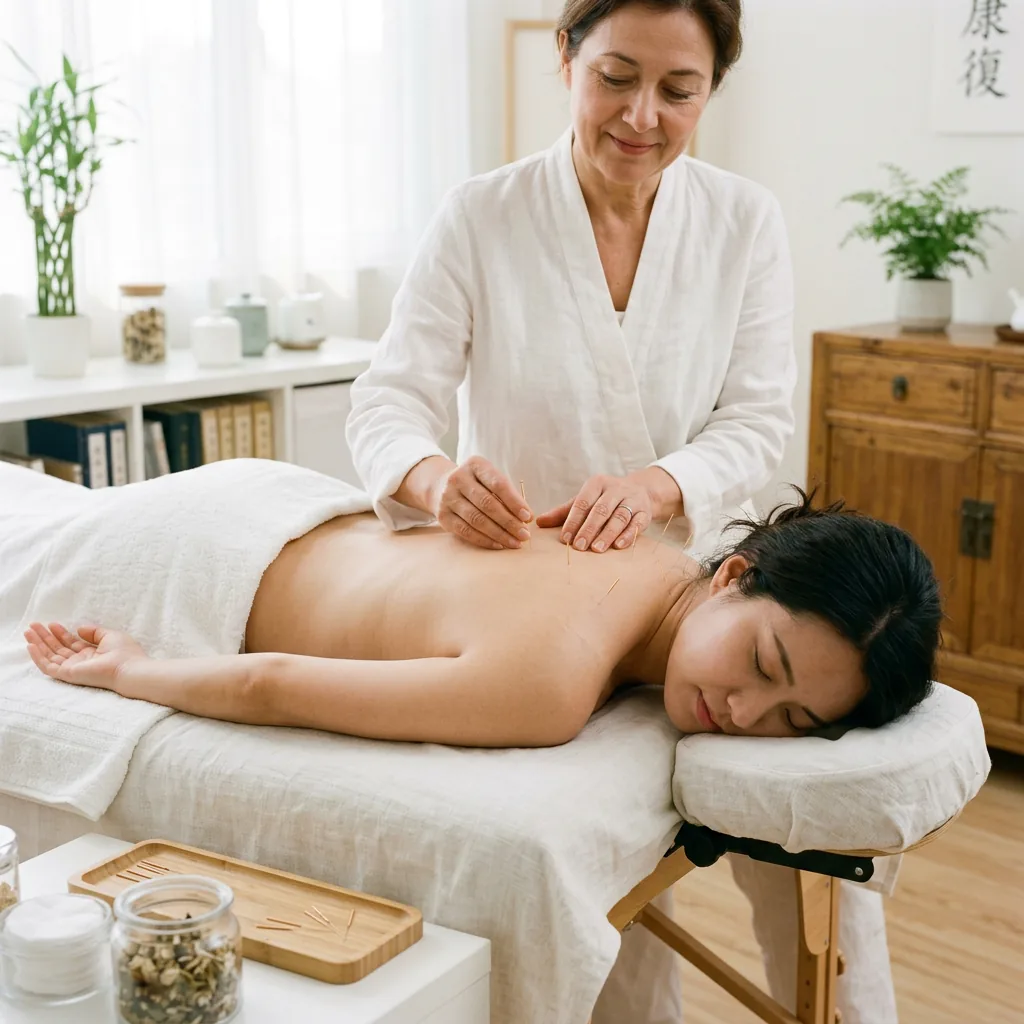
- Acupuncture inserts fine needles at specific points to affect nervous-system signalling. It is the most precise of the four and the one with the deepest evidence base.
- Cupping uses suction to lift and decompress tissue — the opposite direction of force to massage. Cups stay on for 5–15 minutes and leave circular marks that fade over several days.
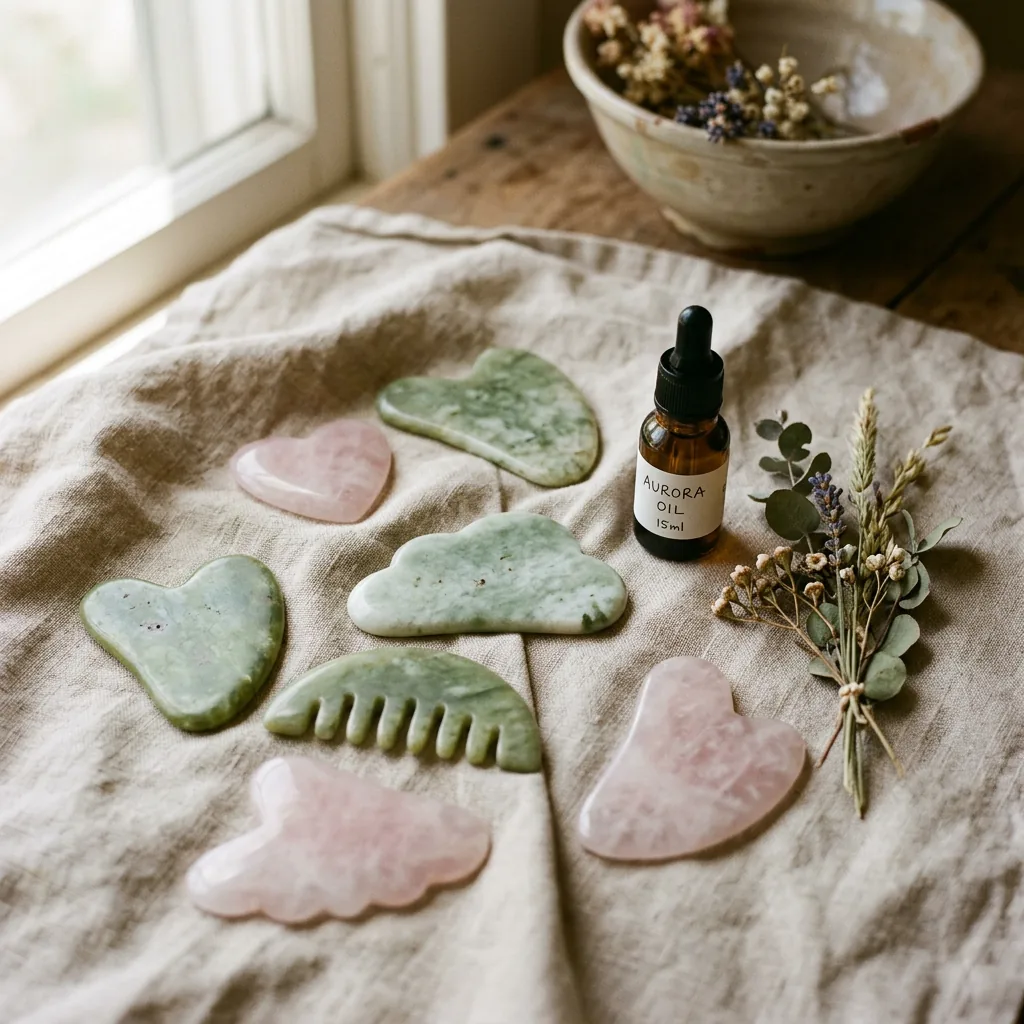
- Gua sha scrapes along the fascia with a smooth-edged tool to move stagnant circulation. Body sessions run 20–30 minutes and improve microcirculation for up to 25 minutes afterwards.
- Tui na is clinical Chinese medical massage along the meridians — 40–50 minutes of hands-on work, often used to soften an area for 20–30 minutes before needles go in.
- Chinese herbal medicine works internally and slowly. Formulas are built per person after a 45–60 minute consultation that includes a full review of your prescriptions.
How do you prepare for a first acupuncture visit in NYC?
Very little preparation is needed, but a few things make the first visit more useful and the treatment safer.
- Eat something in the 2 hours before. Coming in on an empty stomach is the single most common cause of feeling light-headed afterwards.
- Bring a list of every prescription and supplement you take. This matters most if herbs may be prescribed — herb-drug interaction is NCCIH's main safety caution for Chinese medicine.
- Wear loose clothing you can roll above the knee and elbow. Many of the most-used points sit below the elbow and knee.
- Allow 75 minutes for a first appointment, and plan not to rush straight into a meeting afterwards. Most people are noticeably relaxed for an hour or two.
- Tell us if you are pregnant, taking anticoagulants, have a pacemaker, or have a bleeding disorder. Each of these changes what we use and where.
What should you not expect acupuncture to do?
Being clear about the limits is part of doing this properly. Acupuncture does not replace surgery, does not treat infection, and is not a substitute for psychiatric medication or therapy. It is a complementary treatment, which means it works alongside the care your physician is providing — not instead of it.
Some symptoms are red flags that need a physician first, not a needle. Loss of bladder or bowel control with back pain, progressive weakness in a limb, a sudden severe headache unlike any you have had, unexplained weight loss, or chest pain all mean the emergency room or your doctor comes first. We will say so and send you on if you present with any of them.
For insomnia specifically, NCCIH notes that the most strongly recommended treatment remains multicomponent cognitive behavioral therapy for insomnia (CBT-I). Acupuncture sits alongside that, and we will tell you so rather than let you use it as a substitute.
Where is the clinic, and how do you get there?
We are at 408 West 57th Street, Suite 1K, between Columbus Circle and 9th Avenue — the Midtown and Hell's Kitchen border. That puts us walking distance from Columbus Circle, Lincoln Square, Hell's Kitchen and the lower Upper West Side, and roughly 25 minutes from most NYC fertility clinics for patients coordinating cycle-timed care.
Hours are 9am to 7pm Monday through Friday and 9am to 5pm on Saturday, closed Sunday. Call (212) 265-2052 or text (347) 875-2805 — both are answered in English and 中文.
Inside the Clinic

Therapy Comparison: Time, Course and Best Use
| Therapy | Session time | Typical course | Best used for |
|---|---|---|---|
| Acupuncture | 45–60 min | 3–6 visits acute; 6–8 weeks chronic | Back and neck pain, sciatica, migraine, knee osteoarthritis |
| Cupping | 10–20 min | Usually added to a needling visit | Broad muscular tightness across back and shoulders |
| Gua sha | 20–30 min body | As needed; facial runs as a course | Stubborn fascial restriction; facial sculpting |
| Tui na | 40–50 min | Weekly alongside needling | Tissue that needs opening before needles reach it |
| Chinese herbs | 45–60 min consult | 8–12 weeks | Digestion, cycles, sleep, chronic skin patterns |
| Cosmetic acupuncture | 60–75 min | 10 sessions over 5 weeks | Skin tone, glow and fine lines |
Frequently Asked Questions
Is acupuncture covered by insurance in New York?
Medicare covers up to 12 acupuncture sessions per year for chronic low back pain. Commercial plans vary a great deal — some cover acupuncture outright, some only with a referral, some not at all. Bring your card to the first visit and we will check before you commit to a course.
How many acupuncture sessions will I need?
Acute problems usually need 3–6 visits over 2–4 weeks. Chronic patterns typically run weekly for 6–8 weeks before tapering. Migraine prevention is a 6–8 week course. We will not quote a session count before we have examined you.
Do cupping marks mean something went wrong?
No. Circular discolouration is the expected result of suction and fades over several days. NCCIH does ask that you explain their origin to other clinicians so they are not mistaken for signs of physical abuse. Cupping is avoided over active eczema or psoriasis, which it can worsen.
Can I combine acupuncture with physical therapy or chiropractic?
Yes, and many of our patients do. They work on different layers — manual therapy and loading exercise change mechanics, acupuncture changes how the nervous system is processing the signal. Tell us what else you are doing and when, so we can time our sessions to complement rather than pile on.
Is acupuncture safe during pregnancy?
Certain points are avoided in pregnancy and the treatment plan changes accordingly, so tell us at booking rather than on the table. We also coordinate with your obstetrician or reproductive endocrinologist and will not advise anything that conflicts with their plan.
What is the difference between a licensed acupuncturist and dry needling?
A New York licensed acupuncturist (L.Ac.) completes a multi-year master's programme in Oriental medicine and is licensed by the state specifically for acupuncture. Dry needling is a narrower technique used by some other professions, focused on trigger points, without the diagnostic framework of Chinese medicine behind it.
Research & references
Every clinical statement on this page traces back to one of these sources. They are U.S. federal health agencies and academic medical centers — not our own marketing.
NCCIH — Acupuncture: Effectiveness and Safety
Acupuncture has been in use for at least 2,500 years and, per WHO data, is practiced in 103 of 129 reporting countries. A pooled analysis of 20 studies (6,376 participants) found the benefit persisted for a year after treatment ended for every pain condition studied except neck pain.
NCCIH — American College of Physicians low-back pain guideline
The American College of Physicians clinical practice guideline includes acupuncture as an option for initial treatment of chronic low-back pain (moderate-quality evidence) and for acute or subacute low-back pain (low-quality evidence).
NCCIH — Chronic Pain and Complementary Health Approaches
Among the approaches reviewed — acupuncture, yoga, relaxation, tai chi, massage and spinal manipulation — acupuncture was the only one with evidence that it could reduce a patient's need for opioids. The 2022 CDC opioid-prescribing guideline also lists acupuncture as appropriate for some types of chronic pain.
NCCIH — Cupping (safety information)
NCCIH's cupping fact sheet is safety-focused: cupping leaves temporary marks, can cause skin discoloration or burns, may worsen eczema or psoriasis, and equipment must be sterilised between patients. It makes no effectiveness claims.
Citations are summarized — please read the originals. This page is general health education, not medical advice for your specific case. Results vary, and acupuncture and Chinese medicine work best alongside, not instead of, care from your physician.
What Our Patients Say
5.0 · 23 Google reviews5.0 average across 23 verified Google reviews. Shown exactly as written.
★★★★★Amazing! After first acupuncture visit — major improvement. Added cupping and massage — results were immediate and I felt great relief from past pains. Thank you Dr. Shang.
★★★★★Highly recommended! Dr. Shang is a very skilled acupuncturist and I enjoy the treatment every time when I come here.
★★★★★Best acupuncture clinic in town! Dr. Shang is very professional and nice to everyone. I'm coming here regularly and feeling much better now!
Why Choose Acupuncture & Chinese Medicine in Manhattan?
Traditional Chinese Medicine (TCM) has been practiced for over 3,000 years, offering natural, drug-free solutions for a wide range of health conditions. In the heart of Manhattan, Delight Acupuncture combines ancient healing techniques with modern medical knowledge to provide personalized treatments for New Yorkers seeking holistic wellness.
Whether you're dealing with chronic pain, stress, fertility challenges, or simply looking to improve your overall well-being, our licensed practitioners — Dr. Xaoling Shang (尚晓凌医师) and Dr. Yu Qi — offer over 15 years of combined clinical experience. We accept most major insurance plans and are conveniently located near Columbus Circle.
All Available Treatments
Click any treatment below to learn more about how it can help you.